Task 1: Introduction
Modern web applications rely heavily on authenticated sessions to perform actions on behalf of users. When you log in to a website, your browser stores a session cookie that allows the application to recognise you in future requests. While this makes web applications convenient to use, it also creates opportunities for attackers to abuse this trust. One such attack is Cross-Site Request Forgery (CSRF).
Instead of stealing credentials, CSRF tricks a victim’s browser into performing actions on a website where the victim is already authenticated. Because the browser automatically includes cookies with requests, the web application may treat the malicious request as legitimate.
In this room, you will explore how attackers exploit this behaviour and how pentesters can identify vulnerable endpoints in real web applications.
Learning Objectives
- Understand the basic concept of CSRF attacks
- Identify application features that are vulnerable to CSRF
- Exploit CSRF using simple HTML and weak tokens
- Understand common practices used to exploit CSRF
Scenario
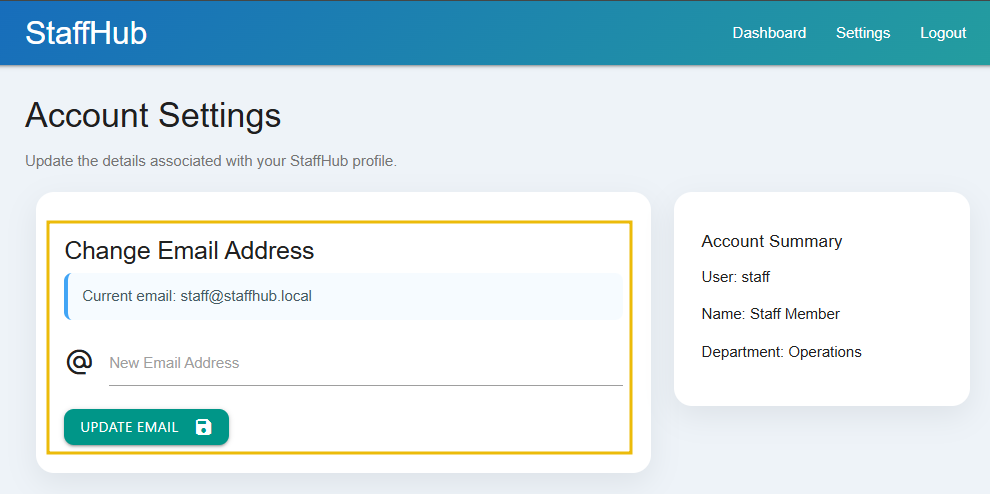
Throughout this room, you will interact with a simple employee portal called StaffHub. This internal application allows employees to update account settings, including their email address and profile preferences.
Your objective as a pentester is to analyse how these actions are performed and determine whether they can be triggered without the user's knowledge. If the application does not properly verify the origin of requests, attackers may be able to trick authenticated users into unknowingly modifying their own account settings.
Connecting to the Machine
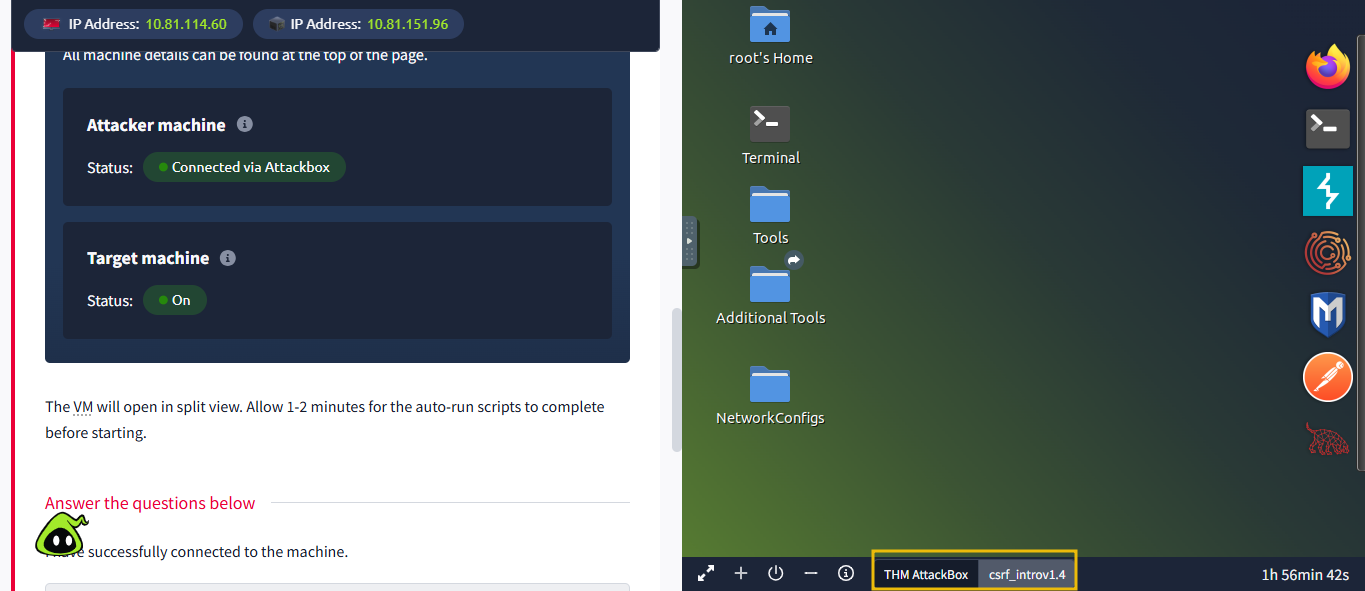
Make sure to start both the AttackBox and the target VM. Both machines will open in split view. Allow 1-2 minutes for the auto-run scripts on the target VM to complete before starting. You can toggle between the AttackBox and the Target VM using the bottom tabs in split view, as shown below:
Note: Once Google Chrome opens and you see the keyring pop-up, simply click Cancel. The pop-up will disappear, and Chrome will continue to work normally.
Answer the questions below
I have successfully connected to the machine.





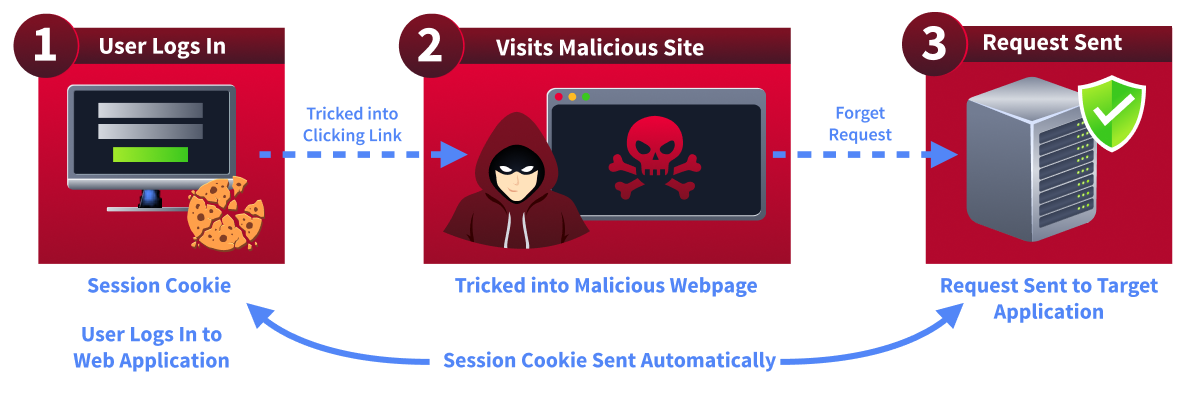 A typical CSRF attack usually follows three simple steps:
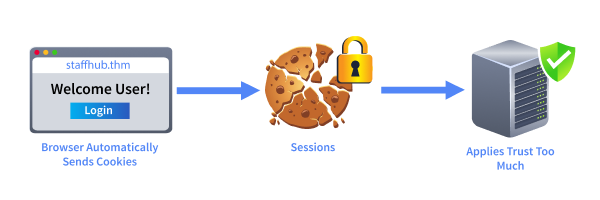 This is the exact behaviour attackers exploit during a CSRF attack. If the application does not verify the origin of the request, it may process the request without realising it was triggered by a malicious page.
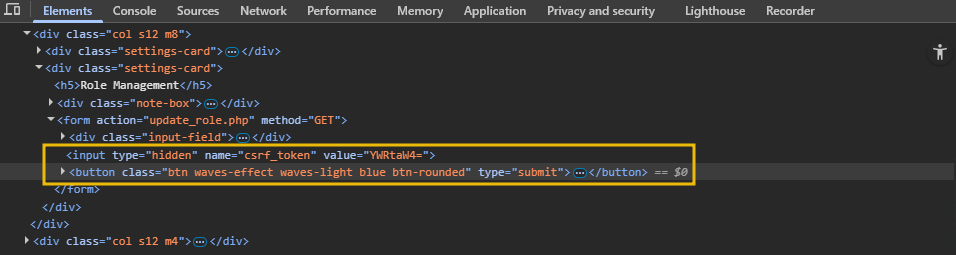
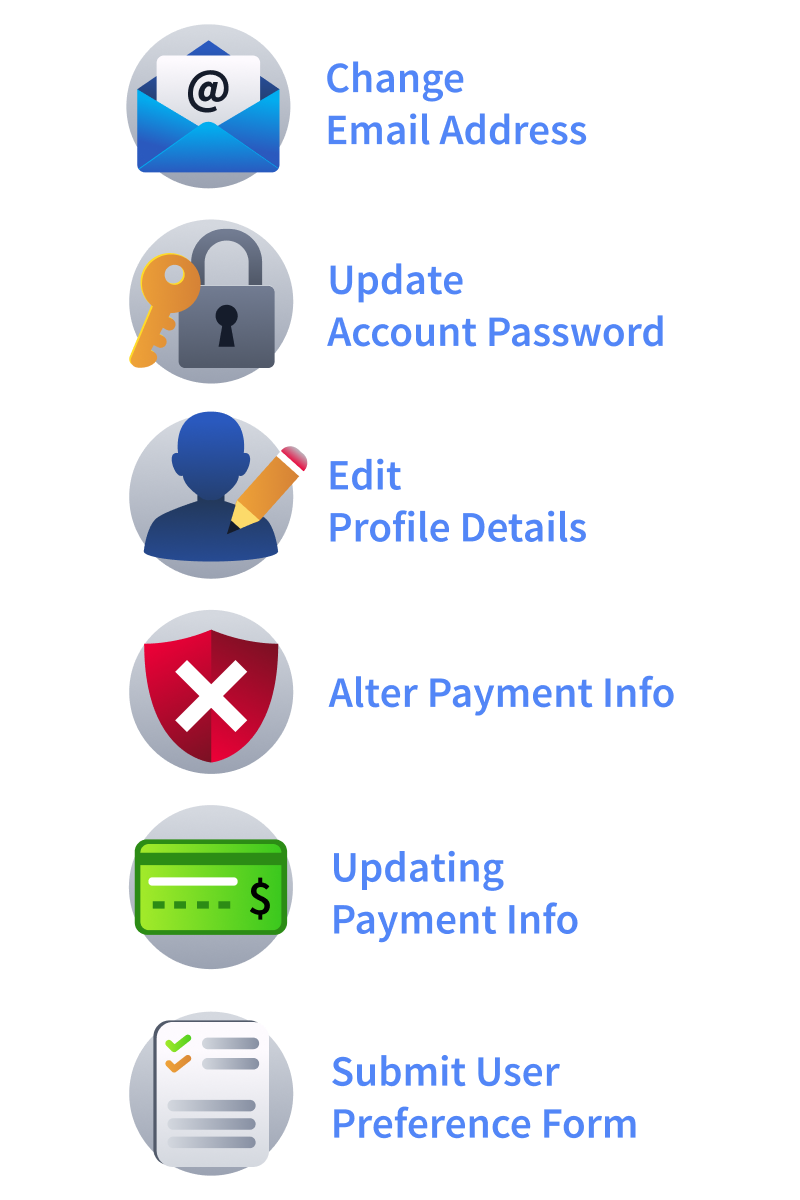 If these requests do not include any protection mechanism, such as CSRF tokens, they may be susceptible to forged requests.